💎 Jewelry Loss Prevention for Stores and High-Value Merchandise
Jewelry loss prevention combines employee procedures, inventory control, physical security, auditing, and technology to reduce the loss of jewelry and other high-value merchandise.
Jewelry can disappear for many different reasons. Theft is an important risk, but inventory losses can also result from misplacement, handling errors, undocumented transfers, inventory discrepancies, internal theft, customer theft, and poor reconciliation procedures.
A strong jewelry loss prevention program does more than install an alarm at the entrance. It creates accountability around what merchandise should be present, where it belongs, who handled it, and when a discrepancy occurred.
🛡️ The objective is to discover and investigate merchandise discrepancies before they become unexplained inventory shrinkage.
📉 Understanding Jewelry Loss and Inventory Shrinkage
Jewelry loss occurs whenever merchandise that should be part of a business inventory can no longer be properly accounted for.
In jewelry stores, showrooms, warehouses, wholesale operations, and other high-value merchandise environments, discrepancies can develop during receiving, storage, customer presentation, display, internal transfers, repairs, inventory counting, shipment, or returns.
📋 Common Types of Jewelry Loss
- 🛍️ Customer theft: shoplifting, concealment, distraction theft, or unauthorized removal.
- 👤 Employee theft: unauthorized removal, substitution, manipulation of records, or merchandise leaving without proper documentation.
- 📦 Inventory misplacement: merchandise moved to another showcase, drawer, tray, department, or storage area without being recorded.
- 📋 Inventory errors: incorrect counting, data-entry mistakes, receiving discrepancies, or inaccurate product records.
- 🔄 Process failures: merchandise handled, returned, transferred, repaired, or stored without consistent accountability.
- 🚚 Transportation and transfer losses: discrepancies occurring while merchandise moves between locations or departments.
An effective jewelry store loss prevention program should address all of these risks instead of treating every missing item as the same type of security incident.
👤 Employee Theft and Unauthorized Handling
Employees often require legitimate access to valuable merchandise. This makes clear internal controls and merchandise accountability especially important.
The objective is not simply to restrict access. A business should be able to determine who is authorized to handle merchandise and how important transactions or transfers are documented.
- ✓ Defined employee access permissions
- ✓ Controlled keys, showcases, cabinets, and storage areas
- ✓ Documented issue and return procedures
- ✓ Additional authorization for selected high-value transactions
- ✓ Frequent inventory reconciliation
- ✓ Review of unexplained inventory discrepancies
- ✓ Video surveillance of important merchandise-handling areas
🛍️ Customer Theft and Distraction Theft
Jewelry presents a special loss-prevention challenge because small, high-value merchandise can be concealed very quickly.
Distraction theft may involve conversation, several merchandise requests, multiple people, or other activity intended to reduce an employee’s attention while jewelry is being handled.
- 👁️ Maintain visual control of merchandise presented to customers
- 💍 Limit the number of high-value pieces presented at one time when appropriate
- 🪟 Return merchandise to its assigned location after presentation
- 🏪 Reduce unnecessary blind spots in the store layout
- 📹 Use video surveillance to support employee awareness and investigation
- ⚠️ Investigate missing merchandise as soon as a discrepancy is discovered
For additional store-level prevention methods, see jewelry store theft prevention strategies.
📦 Jewelry Inventory Control and Accountability
Inventory control is one of the most important parts of jewelry loss prevention because not every missing item has been stolen.
Merchandise may have been placed in the wrong showcase, tray, drawer, storage area, repair department, office, or another store location.
Frequent reconciliation reduces the time between a merchandise discrepancy and its discovery. Instead of waiting for a large periodic inventory count, jewelry businesses can perform smaller cycle counts and regular verification of high-value merchandise.
✅ Useful Jewelry Inventory Control Practices
- 📥 Verify merchandise when received
- 🏷️ Maintain individual identification for high-value items
- 🪟 Assign merchandise to specific showcases, counters, trays, or storage areas
- 🔄 Document important merchandise transfers
- 📋 Perform regular cycle counts
- ⚠️ Investigate discrepancies promptly
- 🕒 Maintain item and transaction history when appropriate
- 📊 Compare physical merchandise with inventory records
Faster inventory checking and better item-level records can reduce manual counting errors and shorten the time required to locate a discrepancy.
🔄 Jewelry Handling and Chain of Custody
Loss prevention becomes more effective when responsibility for merchandise remains clear while jewelry moves through a business.
This is especially important when merchandise moves between:
- 🪟 Showcase and sales counter
- 📦 Storage and display areas
- 🔧 Repair or service departments
- 🏢 Different departments
- 🏬 Multiple store locations
- 🚚 Shipping and receiving areas
- 🎪 Trade shows and temporary displays
A good chain-of-custody process should establish what merchandise moved, where it moved, when it moved, and who was responsible for the transaction.
For particularly valuable merchandise, additional authorization or multi-person verification can be used for sensitive transfers.
🚚 Loss Prevention During Transportation and Transfers
Jewelry loss prevention should continue when merchandise leaves the showcase or sales floor. Transfers between stores, warehouses, repair facilities, trade shows, departments, and other locations create additional opportunities for inventory discrepancies.
- 📋 Document merchandise before transfer
- 🏷️ Maintain item-level identification
- 📦 Use secure packaging appropriate for the shipment
- 🔒 Control who can prepare and receive transfers
- 🧾 Verify merchandise at both sending and receiving locations
- ⚠️ Investigate shipment discrepancies immediately
- 📍 Use appropriate shipment tracking for high-value transfers
🔎 Investigating Missing Jewelry
When jewelry cannot be located, an investigation should begin promptly rather than waiting until the next complete inventory.
- 🔍 Confirm that the item is actually missing.
- 📋 Check its assigned showcase, tray, storage area, and nearby locations.
- 🔄 Review recent merchandise transfers and transactions.
- 👥 Determine who recently handled the merchandise.
- 📹 Review relevant surveillance footage when available.
- 💻 Review inventory and monitoring-system records.
- 📝 Document the discrepancy and investigation results.
The sooner an unexplained discrepancy is investigated, the easier it may be to reconstruct recent merchandise activity.
👥 Employee Procedures and Jewelry Store Security
Technology cannot replace consistent employee procedures. Employees who understand how jewelry losses occur are better prepared to recognize unusual situations, maintain merchandise accountability, and respond quickly when an item cannot be located.
🎓 Employee Training Should Include
- 👁️ Maintaining control of jewelry during customer presentations
- 💍 Correct presentation and return procedures
- 📋 Recording important merchandise transfers
- 🔐 Securing showcases and storage areas
- ⚠️ Reporting discrepancies immediately
- 📹 Understanding how surveillance and monitoring systems support loss prevention
- 🚨 Knowing what to do when merchandise cannot be accounted for
Loss prevention procedures should be practical enough that employees can follow them consistently during normal business operations.
🪟 Jewelry Showcase and Display Security
Jewelry showcases are one of the most important control points in a retail environment. Merchandise must remain accessible enough for customers to view and purchase while remaining protected against unauthorized removal, concealment, and inventory errors.
Effective showcase security can combine:
- 🔐 Locks and controlled showcase access
- 📹 Video surveillance
- 💡 Clear visibility and appropriate lighting
- 👥 Employee merchandise-presentation procedures
- 📋 Regular showcase reconciliation
- 🏷️ Individual merchandise identification
- 🚨 Automated monitoring for selected high-value merchandise
📹 Physical Security as Part of Loss Prevention
Physical security provides another layer in a complete jewelry loss prevention strategy. Depending on the store or facility, it can include:
- 📹 Video surveillance
- 🚪 Access control
- 🔔 Intrusion alarms
- 🔐 Safes and controlled storage
- 💡 Lighting and visibility improvements
- 🪟 Secure showcases and display fixtures
- 🚨 Merchandise monitoring systems
No single security device addresses every type of jewelry loss. Strong programs combine physical security with inventory controls, employee procedures, and appropriate technology.
Learn more about broader jewelry store security systems.
🧠 Technology for Jewelry Loss Prevention
Technology can reduce manual work involved in identifying merchandise, performing inventory counts, monitoring selected display areas, and investigating inventory discrepancies.
The appropriate technology depends on what type of loss the business is trying to prevent.
🏷️ Individual Jewelry Identification
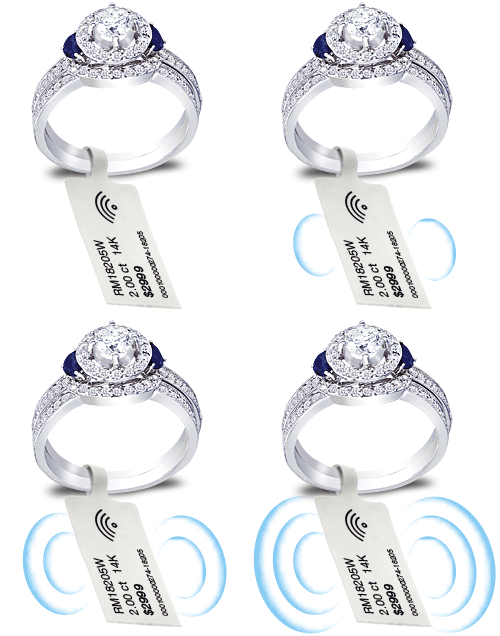
Small electronic security tags can give individual jewelry items their own electronic identity. This allows inventory or monitoring software to recognize specific merchandise rather than maintaining only a total quantity.
Learn more about jewelry security tags →
🎯 High Inventory Identification Accuracy
Automated item identification can provide high inventory accuracy while reducing errors associated with manual counting and record keeping.
Instead of manually checking every item individually, properly configured electronic identification allows the system to recognize tagged merchandise automatically and maintain item-level inventory records.
📦 Faster Jewelry Inventory
Electronic identification can also make inventory verification substantially faster than checking individual jewelry items manually.
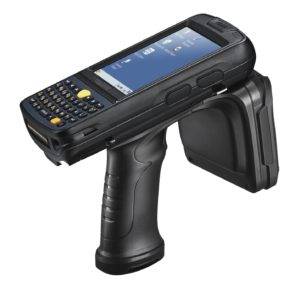
Handheld readers can support inventory audits, cycle counts, storage-area checks, and merchandise verification throughout the business.
🛡️ Automated Smart Shelf Jewelry Monitoring
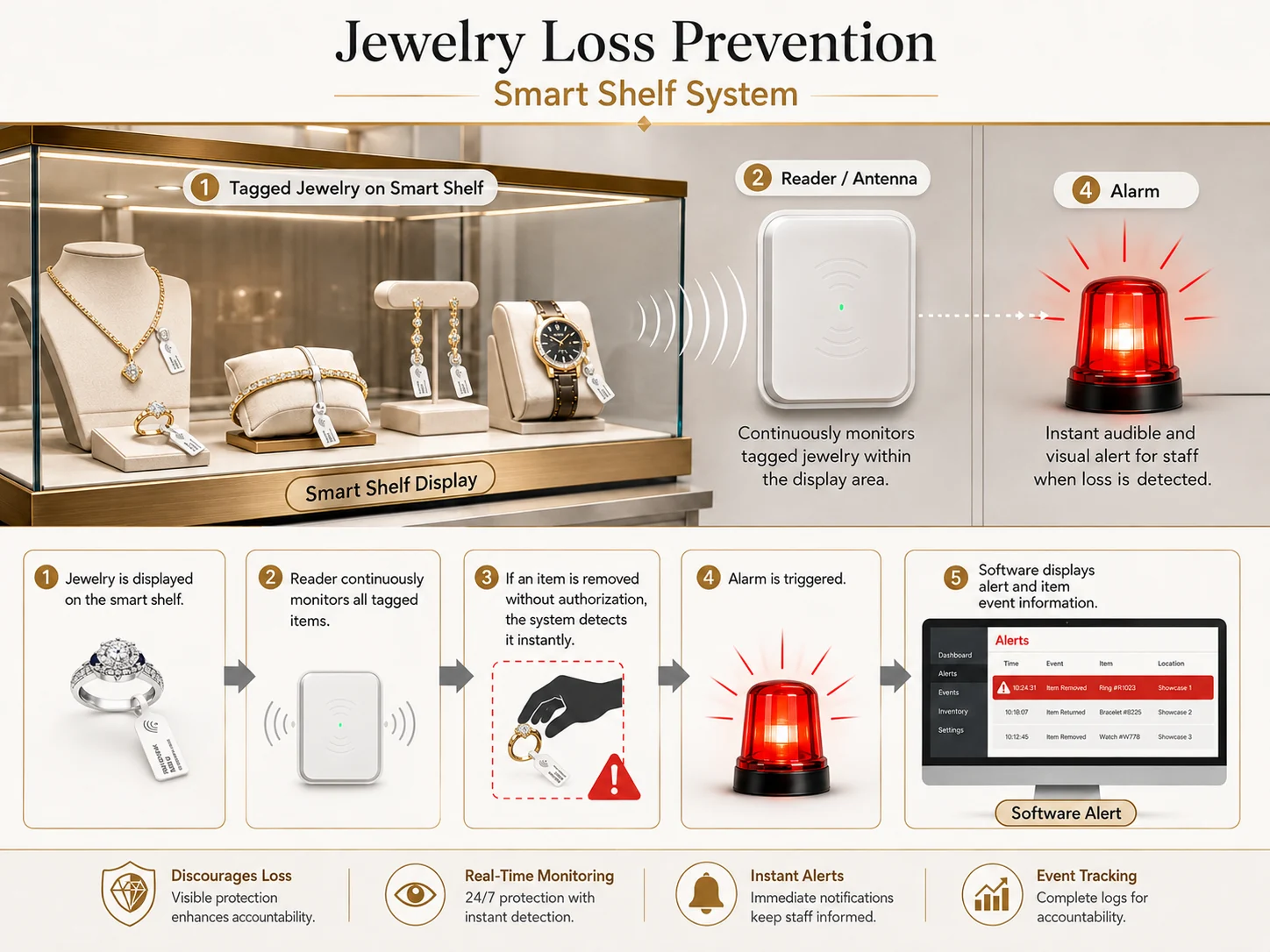
For selected high-value merchandise, automated monitoring can add another layer to a jewelry loss prevention program.
The Fresh USA Smart Shelf system can monitor individually tagged merchandise inside a configured showcase, counter, display area, cabinet, or other protected zone.
If merchandise that should be present is no longer detected, the system can identify the affected item and create a security event.
This is particularly useful for jewelry because a small high-value item can be concealed before a person ever approaches a conventional store exit detector.
👁️ Smart Shelf Monitoring Can Provide
- 👁️ Continuous monitoring of protected merchandise
- 💎 Individual item identification
- 🚨 Missing-item security events
- 📍 Monitoring-area identification
- 📦 Inventory information
- 🕒 Event and item records
🌐 Core Monitoring Can Work Without Internet
The Smart Shelf system does not require a public Internet connection for its core local monitoring functions.
Local jewelry monitoring and inventory functions can continue even when an external Internet connection is unavailable. Remote-access or remote-communication functions depend on the communication options selected for the project.
Learn more about Smart Shelf monitoring →
📊 Manual Jewelry Control vs. Technology-Assisted Monitoring
| Loss Prevention Function | Manual Process | Technology-Assisted Process |
|---|---|---|
| Inventory Count | Individual manual verification | Faster electronic inventory scanning |
| Item Identification | Labels, paperwork, or manual records | Individual electronic merchandise identity |
| Inventory Accuracy | More dependent on manual counting and data entry | High accuracy with automated item identification |
| Display Reconciliation | Periodic employee checks | Automated monitoring can supplement employee checks |
| Missing Merchandise | May not be discovered until a later inventory count | Monitored merchandise can generate a security event when it is no longer detected |
| Internet Dependency | Depends on the systems being used | Core Smart Shelf local monitoring can operate without public Internet access |
| Event Records | Primarily employee documentation | Software can maintain monitoring and inventory records |
Technology does not eliminate the need for employee procedures. It provides additional information and automation that can help personnel discover discrepancies sooner and maintain stronger inventory accountability.
✅ Jewelry Store Loss Prevention Checklist
Jewelry businesses can use this checklist when reviewing their current loss prevention procedures:
- ✓ Is high-value merchandise individually identified?
- ✓ Do employees know where merchandise should be displayed or stored?
- ✓ Are important merchandise transfers documented?
- ✓ Are showcases and storage areas properly secured?
- ✓ Are inventory counts performed frequently enough?
- ✓ Are unexplained discrepancies investigated quickly?
- ✓ Is responsibility clear when jewelry changes hands?
- ✓ Are employees trained in jewelry loss prevention procedures?
- ✓ Does video surveillance cover important merchandise-handling areas?
- ✓ Would faster inventory or automated monitoring reduce the time required to discover missing merchandise?
🚨 When Automated Jewelry Monitoring Makes Sense
Automated item monitoring can be particularly useful when merchandise is:
- 💎 High in value
- 📦 Large enough in quantity to make frequent manual counts inefficient
- 🪟 Displayed in defined showcases, counters, cabinets, or protected areas
- 🏷️ Suitable for individual electronic security tags
- ⚠️ At increased risk of theft, misplacement, or unexplained shrinkage
Fresh USA can configure jewelry monitoring and inventory solutions according to the number of protected items, showcase configuration, monitoring areas, inventory requirements, and actual store layout.
🔗 Jewelry Loss Prevention and Theft Prevention Work Together
Jewelry loss prevention is broader than theft detection alone.
A complete loss prevention strategy can address customer theft, employee theft, inventory shrinkage, merchandise misplacement, transfer errors, inventory discrepancies, and operational mistakes.
A dedicated jewelry theft prevention system can support that broader strategy by adding item-level identification, automated monitoring, security events, and faster inventory management.
For detailed information about Fresh USA jewelry security tags, Smart Shelf monitoring, software, theft alerts, inventory management, system design, installation, and equipment options, visit our dedicated Jewelry Theft Prevention System page.
❓ Jewelry Loss Prevention FAQ
What is jewelry loss prevention?
Jewelry loss prevention is the combination of inventory controls, employee procedures, physical security, auditing, and technology used to reduce theft, shrinkage, misplacement, and other merchandise discrepancies.
What causes jewelry inventory shrinkage?
Jewelry inventory shrinkage can result from customer theft, employee theft, inventory errors, merchandise misplacement, undocumented transfers, receiving mistakes, or other failures in inventory accountability.
How can jewelry stores reduce inventory loss?
Jewelry stores can reduce inventory loss by maintaining accurate merchandise records, controlling access, documenting transfers, performing regular inventory checks, training employees, using appropriate physical security, and investigating discrepancies promptly.
How can technology improve jewelry inventory accuracy?
Electronic item identification can provide high inventory accuracy while reducing dependence on manual counting and data entry. It can also make frequent cycle counts and merchandise verification substantially faster.
Can a jewelry monitoring system work without Internet?
Yes. Core local Smart Shelf monitoring can operate without a public Internet connection. Functions that require remote communication depend on the communication configuration selected for the system.
Can technology help prevent jewelry loss?
Yes. Technology can support jewelry loss prevention through faster inventory counting, item-level identification, video surveillance, access control, event records, and automated monitoring of selected high-value merchandise.
What is the difference between jewelry loss prevention and a jewelry theft prevention system?
Jewelry loss prevention is the broader business strategy used to reduce many different types of merchandise loss. A jewelry theft prevention system is one component of that strategy and focuses more specifically on protecting merchandise against unauthorized removal.
Can automated monitoring replace employee procedures?
No. Automated monitoring works best together with employee training, inventory reconciliation, physical security, and clear merchandise-handling procedures.
🛡️ Build a Stronger Jewelry Loss Prevention Strategy
Effective jewelry loss prevention combines people, procedures, inventory control, physical security, and appropriate technology.
Fresh USA can help determine whether faster inventory management, item-level identification, Smart Shelf monitoring, jewelry security tags, or a complete jewelry theft prevention system should be added to an existing loss prevention program.