Learning how to organize a coat check begins with more than buying racks and numbered tickets. A successful coat check needs enough storage capacity, a clear numbering system, an efficient guest line and a reliable process for returning the correct garment.
These details become especially important at theaters, hotels, casinos, museums, restaurants, weddings, conferences and other venues where many guests may arrive or leave at the same time.
A well-organized coat check can reduce wait times, prevent lost or mismatched coats and make the work easier for attendants. Small operations may need only fixed racks and paired tickets. Larger permanent facilities may benefit from numbered position search, powered garment conveyors or other automated coat check systems.
Explore Automated Coat Check Systems Request a Custom Quote
Quick Coat Check Setup Checklist
Before opening a temporary or permanent coat check, confirm that you have:
- Enough storage positions for the maximum expected number of coats
- A visible and accessible coat check location
- Numbered racks, hangers or garment positions
- A matching ticket or identification system
- A clear check-in and pickup process
- Signs showing where guests should wait
- Separate storage for umbrellas, bags and small personal items
- A procedure for lost tickets and disputed items
- Enough trained attendants for the busiest arrival and departure periods
- A plan for unexpected demand or system interruptions
1. Estimate Coat Volume and Peak Traffic
Start by estimating the maximum number of garments the coat check may receive. Do not plan only around average attendance. A busy winter event can produce far more coats than a similar event during warmer weather.
Consider:
- Maximum venue attendance
- Expected percentage of guests using the coat check
- Season and local weather
- Average garment size and length
- Bulky winter coats and garment bags
- Umbrellas, scarves, hats and other accepted items
- Whether several events may overlap
Peak traffic is just as important as total capacity. A theater may receive coats gradually before a performance but face a concentrated pickup period when the performance ends. A wedding or conference may produce similar departure peaks.
The coat check should therefore be designed for the busiest fifteen or thirty minutes of the event, not only for the total number of garments stored during the day.
2. Choose the Right Coat Check Location
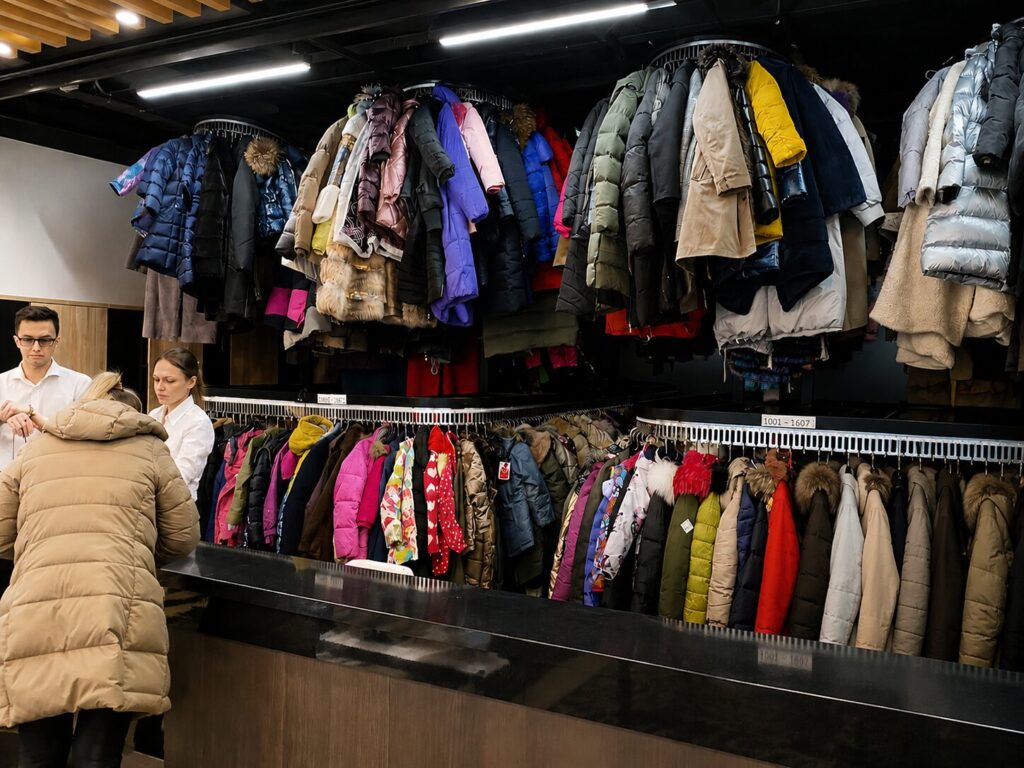
A coat check should be easy for guests to find without blocking the main entrance, lobby, corridor or emergency exit. The best location creates a natural path from guest arrival to check-in and from the event area back to pickup.
Guest-Side Requirements
- Clear visibility from the entrance or lobby
- Enough room for a waiting line
- Simple signs for check-in and pickup
- Accessible service counter height
- A layout that does not block doors or walkways
Attendant-Side Requirements
- Enough room to receive and return garments
- Direct access to racks or storage equipment
- Clear numbered storage sections
- Safe walking paths without loose items on the floor
- Space for supplies, spare hangers and exception records
A large room is not automatically an efficient room. Long rows of racks can increase walking and retrieval time even when there appears to be plenty of storage space.
3. Create Clear Numbered Storage Positions
Every accepted garment should be assigned to a specific numbered position. The number may identify an individual hanger, a rack section, a shelf, a basket or a position on a garment conveyor.
The numbering sequence should be easy to understand. Avoid creating sections that require attendants to remember complicated room locations or search through several unrelated racks.
Good numbering practices include:
- Using large and visible numbers
- Keeping positions in a logical sequence
- Separating similar-looking sections with clear signs
- Using different number ranges for separate rooms or service counters
- Leaving room for future positions
- Avoiding duplicate numbers anywhere in the same operation
Numbered storage reduces dependence on staff memory and helps new attendants follow the same process as experienced employees.
4. Choose a Coat Check Ticket or Identification System

The identification method connects the guest with the assigned garment position. The best option depends on the size, frequency and security requirements of the operation.
Paired Paper Tickets
A common system uses two matching numbered tickets. One ticket is attached to the hanger or storage position, and the other is given to the guest.
Paper tickets are inexpensive and practical for temporary events, but they can be lost, damaged or difficult to read in low-light environments.
Reusable Numbered Tokens
Plastic cards, tags or tokens can be used repeatedly. They are more durable than paper tickets but still require a reliable process for collecting and returning them.
Digital Position Entry
An attendant can enter the assigned position into a terminal or conveyor controller. This can reduce handwriting errors and help locate the correct storage position more quickly.
RFID Cards or Wristbands
RFID cards, key fobs or waterproof wristbands can be associated with individual garment positions. They may be useful for hotels, casinos, resorts, fitness facilities and permanent venues that already use guest credentials.
RFID is optional. A well-organized coat check can operate with traditional numbered tickets when that method matches the venue’s needs.
5. Design a Consistent Coat Check-In Process
Every attendant should follow the same steps when receiving a garment:
- Receive one coat or approved item at a time.
- Check whether the item meets the coat check policy.
- Remove or secure loose accessories when necessary.
- Place the garment on an appropriate hanger.
- Assign it to the next available numbered position.
- Attach or record the matching identifier.
- Give the corresponding ticket, token or card to the guest.
- Confirm that the guest understands where pickup will take place.
The process should remain simple enough to repeat quickly without skipping identification or verification steps.
Define What the Coat Check Accepts
Clearly state whether the operation accepts:
- Coats and jackets
- Hats and scarves
- Umbrellas
- Garment bags
- Backpacks or handbags
- Luggage
- Valuable or fragile items
Guests should see the policy before reaching the counter. This prevents discussions at the service point from slowing the entire line.
6. Plan a Fast Coat Pickup Process
Pickup is often more difficult than check-in because many guests may leave at once. The retrieval process should allow attendants to see the guest’s identifier, locate the assigned position and return the garment with as little unnecessary movement as possible.
A basic pickup process should include:
- Receive or scan the guest’s ticket or identifier.
- Confirm the assigned storage number.
- Locate the corresponding hanger or position.
- Bring the garment to the pickup counter.
- Verify the number before releasing the item.
- Return or close the position for future use.
Where possible, separate guests who are checking in garments from guests who are collecting them. Even a small difference in line position or counter signage can prevent the two groups from blocking one another.
How to Reduce Coat Check Wait Times
Long coat check lines usually result from several small delays rather than one single problem. The room layout, numbering method, staffing level and retrieval distance all affect service speed.
To reduce coat check wait times:
- Place instructions where guests can read them before reaching the counter
- Separate check-in and pickup lines when space permits
- Use large, easy-to-read position numbers
- Keep frequently used supplies within reach
- Avoid storing loose items among hanging coats
- Assign attendants specific responsibilities during peak periods
- Open additional service points for large departure peaks
- Organize garments in a predictable sequence
- Reduce the distance attendants must walk for each retrieval
- Test the process under realistic busy conditions
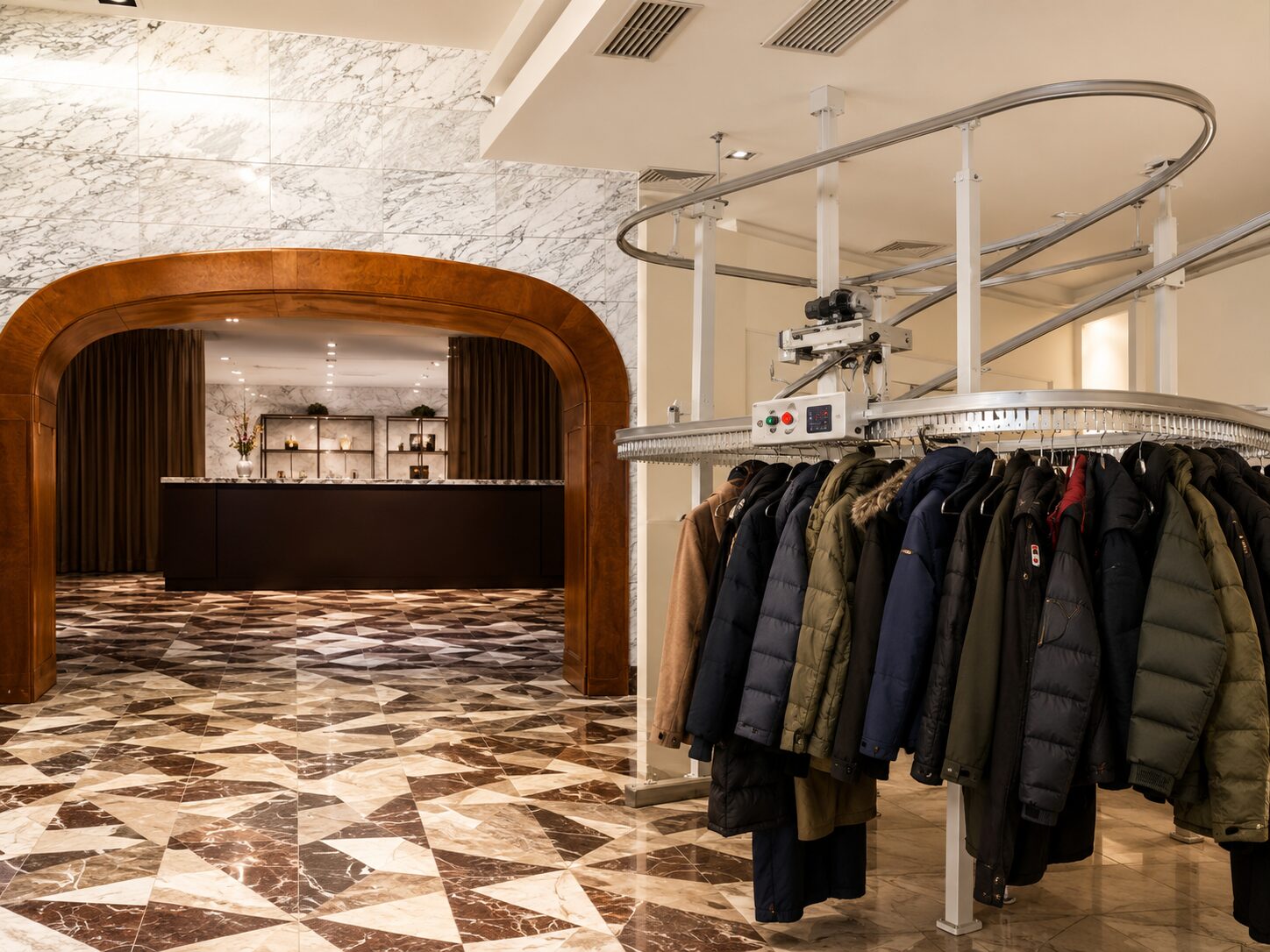
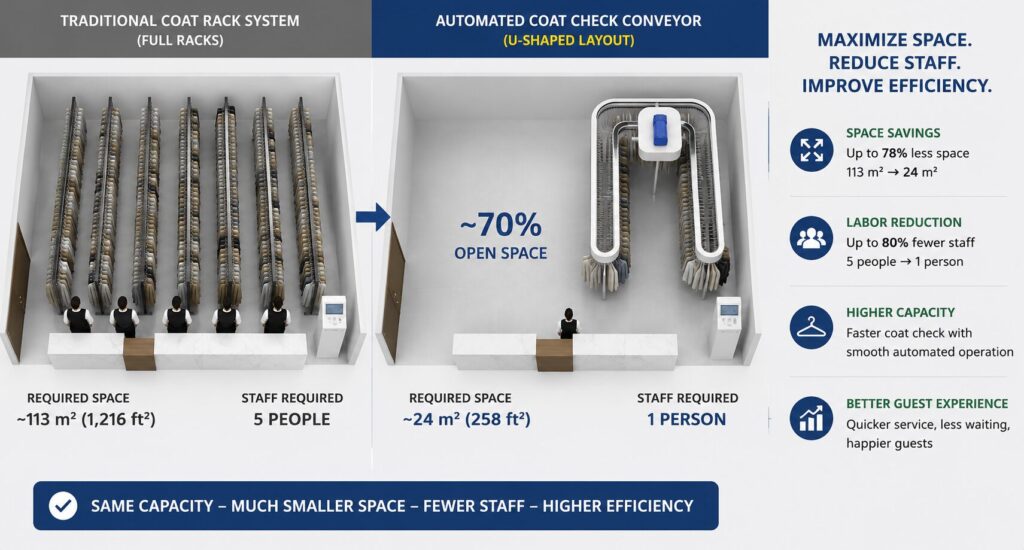
For permanent high-volume operations, a powered garment conveyor can move the selected storage section to the attendant. This reduces repeated walking through the storage room and can improve retrieval consistency.
7. Train Attendants and Assign Clear Roles
Staff training should cover more than ticket handling. Attendants need to understand the complete storage and retrieval process, including what to do when normal procedures cannot be followed.
Training should include:
- How garments are assigned to positions
- How tickets or identifiers are attached and verified
- What items may or may not be accepted
- How to handle wet or unusually long garments
- How to store umbrellas and loose accessories
- How to respond to a lost ticket
- How to document a disputed or missing item
- Who may enter the storage area
- What to do during a power or equipment interruption
Separate Roles During Busy Periods
At a small event, one person may receive, store and return garments. At larger events, service may improve when responsibilities are divided:
- One attendant receives guests and identifiers
- One or more attendants store and retrieve garments
- Another attendant verifies and returns items
- A supervisor handles lost tickets and exceptions
The correct staffing level depends on the room layout, number of service points and concentration of guest arrivals and departures.
8. Prevent Lost or Mismatched Coats
Most coat check problems can be reduced by using a consistent identification process. Staff should never rely only on memory or a description such as “a black coat.”
To prevent lost or mismatched garments:
- Use one unique identifier for every accepted garment position
- Verify that both parts of a paired ticket match
- Keep position numbers visible and in order
- Do not move garments without updating their assigned position
- Do not release a garment without verifying the identifier
- Record lost-ticket cases separately
- Limit access to the garment storage area
- Use cameras or transaction records when appropriate
Create a Lost-Ticket Procedure
A guest without a ticket should not be allowed to select a garment directly from the storage area. The venue should use a verification procedure based on its own policy.
The procedure may include:
- A detailed garment description
- Description of items inside the pockets
- Guest identification and contact information
- A record of the assigned position
- Supervisor approval
- Delayed release until regular pickup traffic has ended
The policy should protect both the guest and the venue without creating confusion during the busiest service period.
9. Plan Separate Storage for Umbrellas and Small Items
Umbrellas, scarves, hats, bags and loose personal belongings can easily become separated from a hanging coat. They should not be placed loosely on the floor or mixed among unrelated garments.
Depending on the operation, use:
- Numbered umbrella holders
- Labeled shelves
- Baskets or trays
- Garment bags
- Lockers or cabinets
- Assigned storage zones
The small-item position should remain connected to the same guest identifier used for the coat.
10. Test the Complete Workflow Before Opening
Run a realistic test before the coat check begins serving guests. A quiet test with only one or two garments will not reveal the problems that appear during a crowded departure period.
The test should include:
- Several guests arriving at once
- Several pickup requests at once
- Similar-looking coats
- Long and bulky garments
- A lost or damaged ticket
- An item placed in the wrong position
- Guests entering the wrong line
- A temporary equipment or power interruption
Measure where attendants stop, search, cross paths or wait for another employee. Small changes to signs, storage order or staff positions can significantly improve the workflow.
When Fixed Coat Racks Are Enough
Fixed racks can work well for small events, restaurants, private functions and coat checks with moderate volume and enough accessible floor space.
A basic fixed-rack setup may be appropriate when:
- Only a small number of coats is expected
- Arrival and departure times are spread out
- The storage room is compact and easy to navigate
- Attendants can reach every position quickly
- The operation is temporary or seasonal
- There is no need for digital search or access control
When to Consider a Coat Check Conveyor
A garment conveyor is worth considering when fixed racks begin to limit capacity or service speed.
Common signs include:
- Attendants spend too much time walking between racks
- Long departure lines occur regularly
- The room has corners, columns or an irregular shape
- Available ceiling height is not being used
- The venue needs more garment positions without expanding the room
- Several coat check counters must use the same storage area
- Numbered position search or RFID identification is required
- The venue needs a permanent professional coat storage system
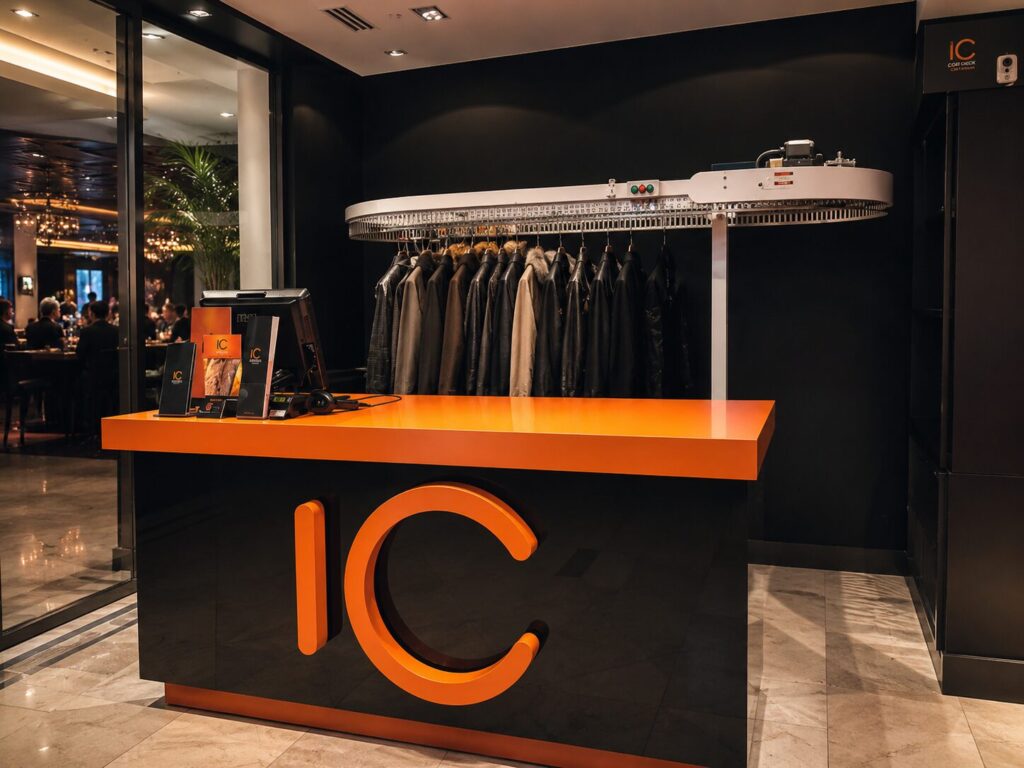
A powered conveyor moves hanging garments along a custom track. Basic systems can use forward and reverse controls, while more advanced configurations can locate a selected position automatically.
Learn more about automated coat check systems or explore broader automated cloakroom and wardrobe systems.






Coat Check Planning for Different Venues
Weddings and Private Events
Temporary event coat checks need simple signs, paired tickets, portable racks and a clear plan for the concentrated departure period. The location should be convenient without interfering with guest arrival or photography areas.
Theaters and Performing Arts Venues
Theaters usually face predictable pickup peaks after performances and during intermissions. Storage order and retrieval distance are especially important because many guests may request their coats within a few minutes.
Hotels and Casinos
Hotels and casinos may operate coat checks for restaurants, conferences, banquets, gaming areas and entertainment venues. Permanent systems may require several service points, reusable identifiers or integration with broader guest-service operations.
Museums and Public Facilities
Museums, galleries and public buildings need organized visitor flow, controlled storage access and clear policies for bags, umbrellas and restricted items.
Restaurants, Nightclubs and Banquet Halls
These venues often have limited coat-room space and concentrated evening traffic. A compact and clearly numbered layout can reduce congestion near the entrance.
Fitness Clubs, Spas and Country Clubs
Reusable cards or waterproof wristbands may be appropriate where guests already use the same identifier for lockers, access or other services.
Information Needed for a Permanent Coat Check System
For a permanent custom coat check or garment conveyor proposal, prepare:
- Installation address and facility type
- Room length and width
- Ceiling height
- Drawings, floor plans or clear photographs
- Locations of doors, counters and columns
- Expected maximum garment quantity
- Average garment length and type
- Peak arrival and pickup volume
- Number of attendants and service openings
- Preferred ticket, number or RFID process
- Required installation and training services
- Possible future expansion requirements
US Conveyor Dimensions EU Conveyor Dimensions
Download Project Questionnaire
Related Coat Check and Garment Storage Solutions
Automated Coat Check Systems
Explore custom coat check conveyors, numbered position search, RFID identification and controlled garment retrieval for high-volume venues.
Automated Cloakroom and Wardrobe Systems
Review broader garment storage and retrieval solutions for visitor cloakrooms, employee wardrobes and commercial facilities.
Garment Conveyor Systems
Review powered garment conveyor equipment, custom layouts and storage configurations for hanging garments.
Frequently Asked Questions
What do I need to organize a coat check?
You need a suitable location, enough garment capacity, numbered storage positions, hangers, a ticket or identification method, clear signs and a consistent check-in and pickup process.
How many coat positions do I need?
Plan capacity around the maximum expected number of garments, not average attendance. Also consider winter clothing, long coats, bulky items, hanger spacing and a reserve for unexpected demand.
How can I reduce coat check lines?
Use clear signs, separate check-in and pickup flows when possible, organize garments in numbered order, prepare for peak departure times and reduce the distance attendants must walk to retrieve each coat.
How do I prevent lost or mismatched coats?
Assign every accepted garment to one numbered position, give the guest the matching identifier, verify the number before return and use a written exception process for lost tickets or disputed items.
What type of coat check tickets should I use?
Small operations can use paired paper tickets. Reusable numbered tokens, digital position entry or RFID cards and wristbands may be more suitable for permanent or high-volume coat checks.
How many coat check attendants are needed?
Staffing depends on guest volume, room layout, retrieval distance, the number of service points and how concentrated arrival and departure times are. Test the workflow under realistic peak conditions before deciding.
Can a coat check accept umbrellas, bags and small items?
Yes, but the accepted items and liability policy should be clearly defined. Loose items should use labeled shelves, baskets, trays or cabinets so they remain associated with the correct guest identifier.
When should I consider a coat check conveyor?
A garment conveyor is worth considering when fixed racks require too much walking, the room has an irregular layout, available height is underused or large departure peaks create long retrieval times.
Need Help Planning a Permanent Coat Check?
Fresh USA designs custom garment conveyor and coat check systems around the available room, garment capacity, service counter location and expected guest traffic. Systems can range from a basic powered conveyor to automated position search, RFID identification and controlled pickup.
Request a Custom Coat Check Proposal Download Project Questionnaire