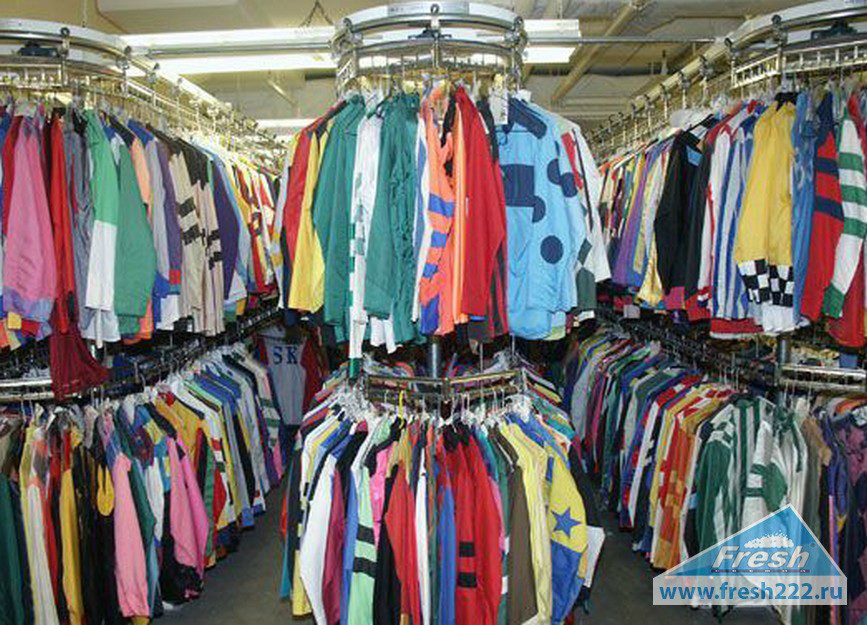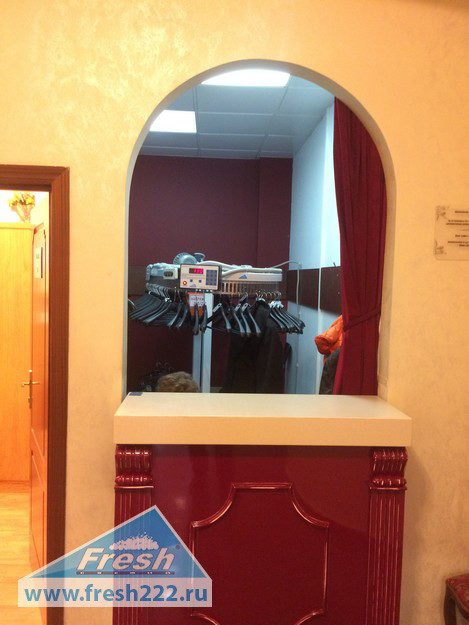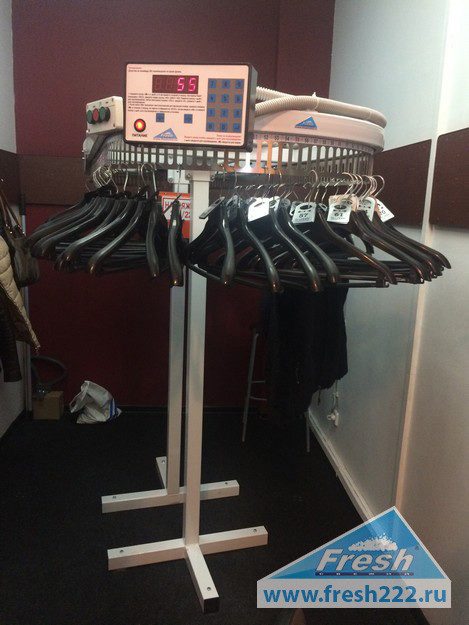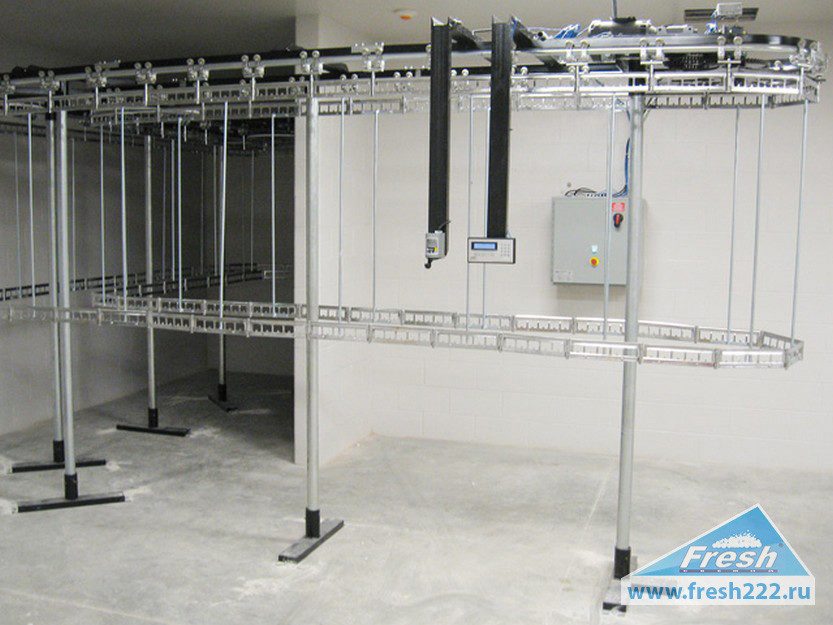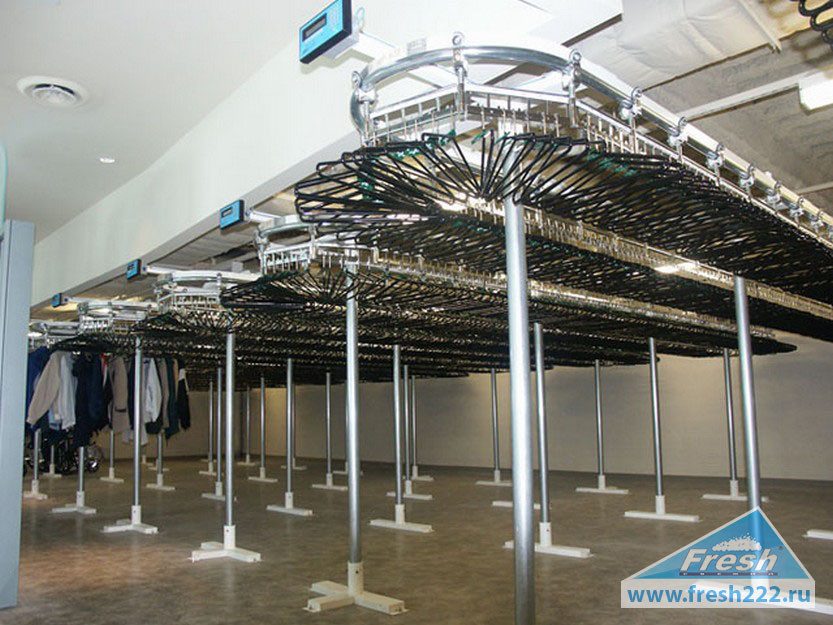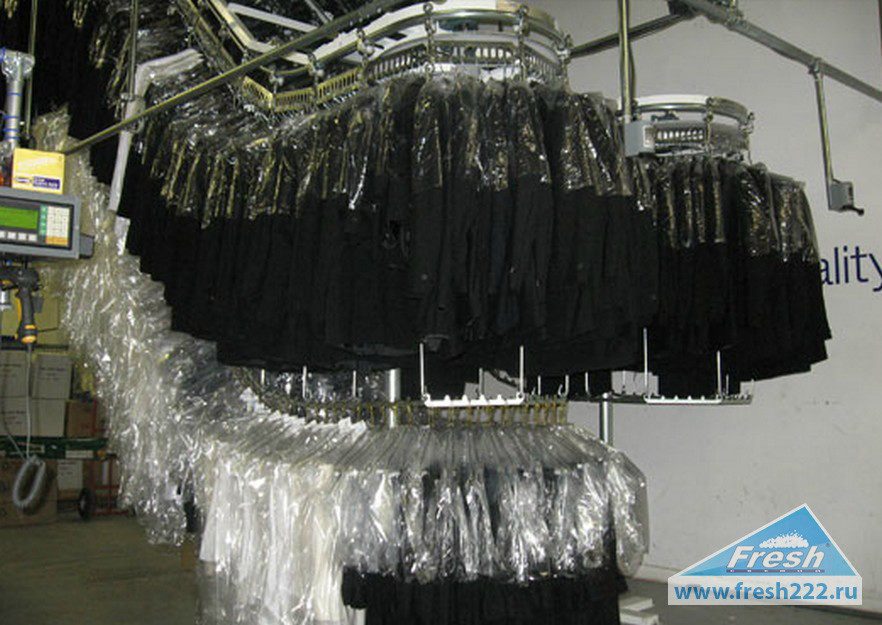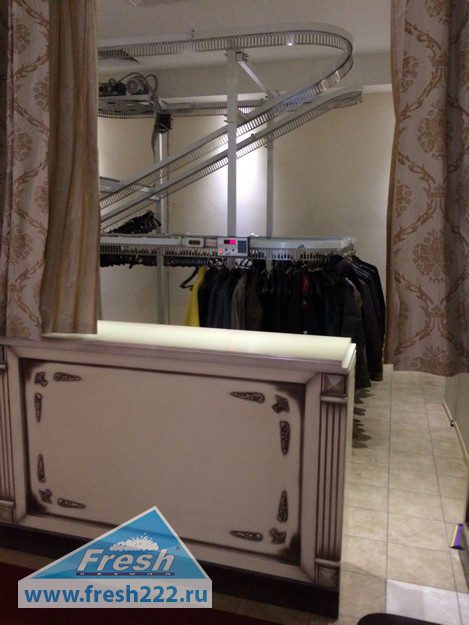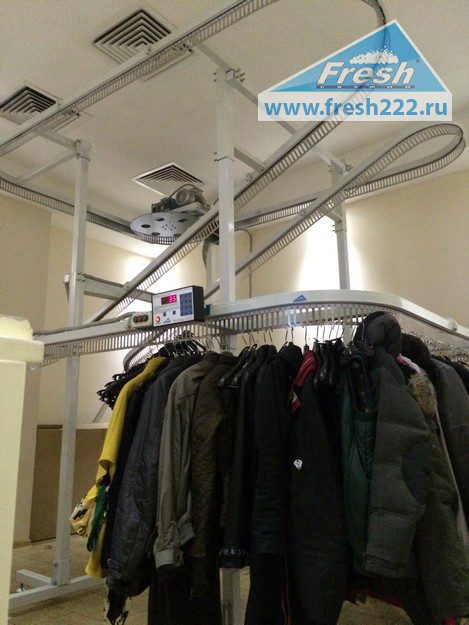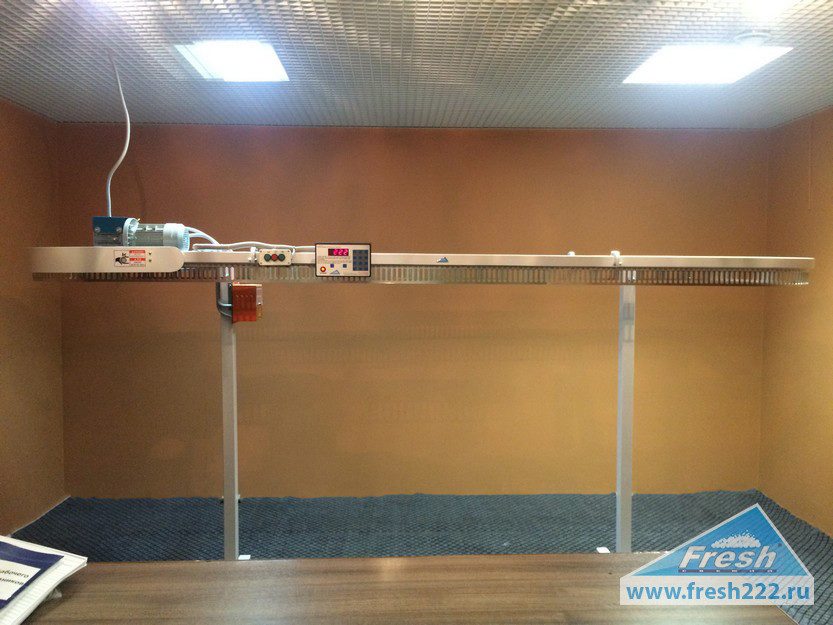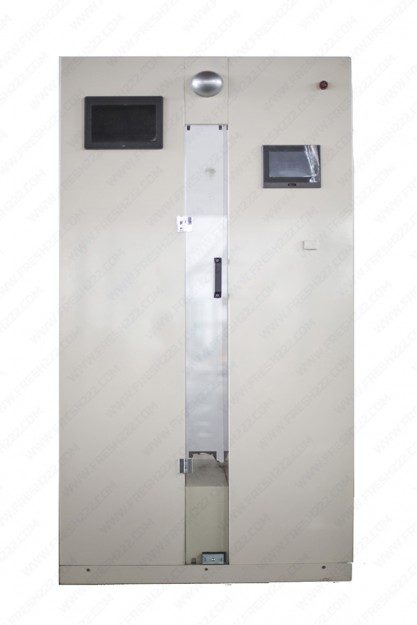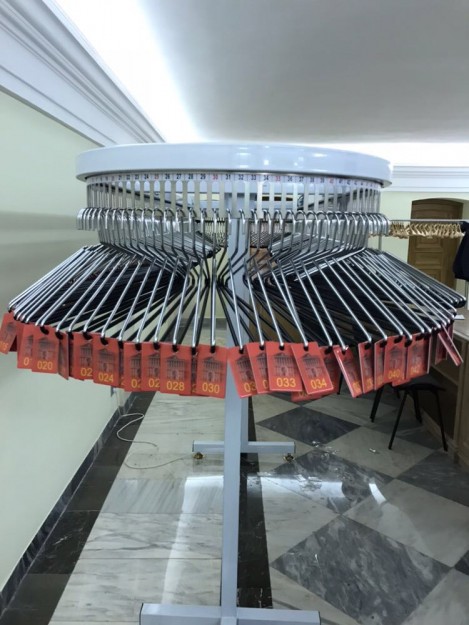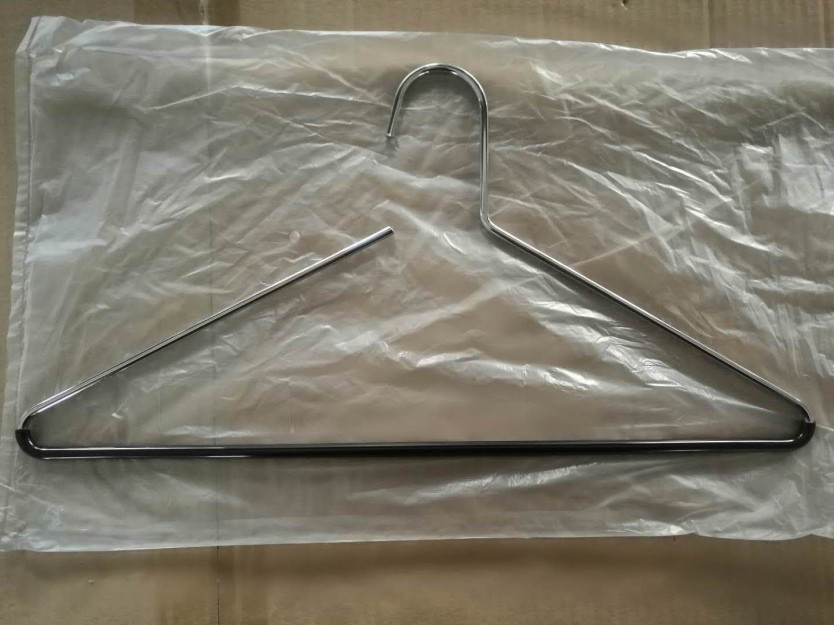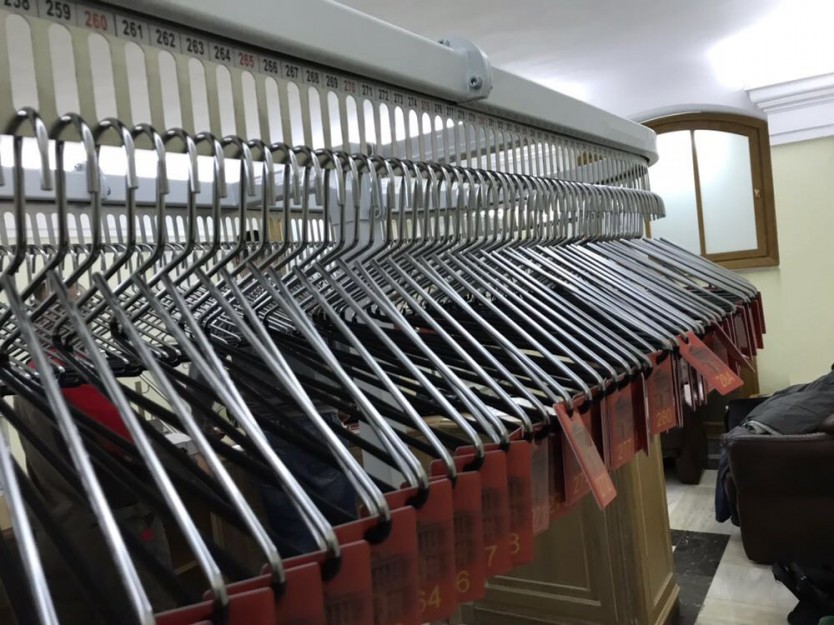
The core of the system is a powered garment conveyor that moves the required hanger or storage position directly to an attendant, operator station or controlled pickup point. This reduces unnecessary walking and manual searching, improves the use of floor and vertical space and supports faster service during peak arrival and departure periods.
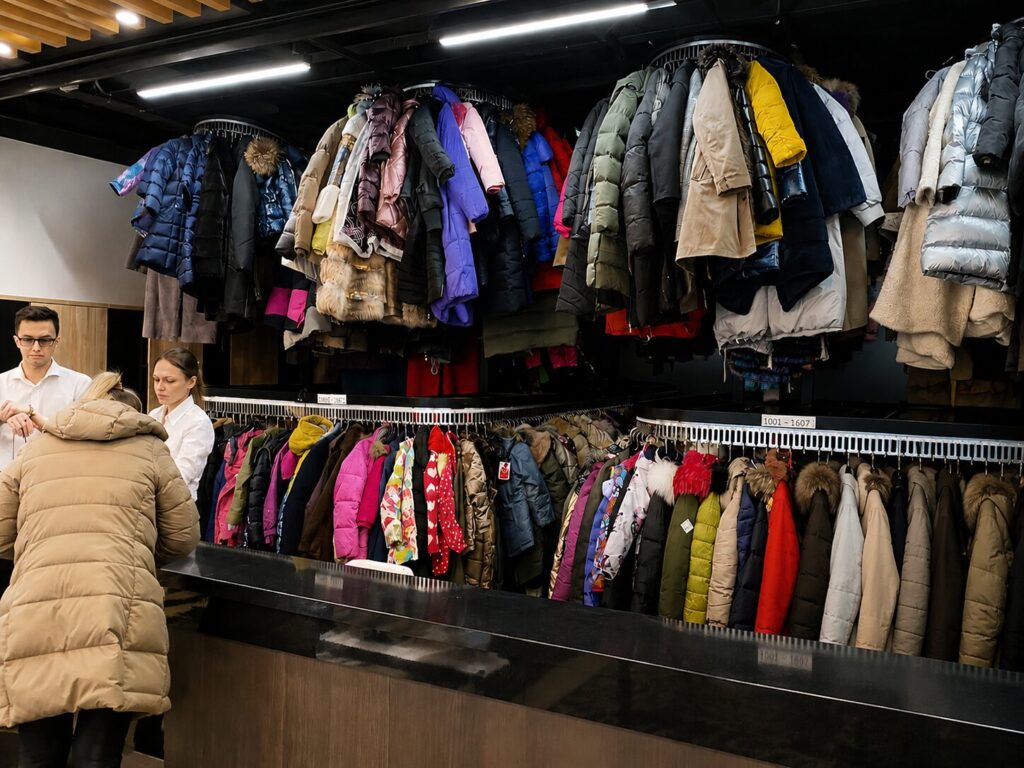
Terminology differs by market. In the United Kingdom, Europe and many international markets, these solutions are commonly described as automated cloakroom systems or automated wardrobe systems. In the United States and Canada, similar visitor-garment applications may be called coat check systems, coat check conveyors, checkroom systems or coatroom systems. Fresh USA designs the equipment and workflow according to the actual application rather than relying on one standard configuration.
Why Organizations Choose Automated Cloakroom Systems
Traditional cloakrooms and wardrobe departments often depend on fixed racks, open aisles and manual searching. As garment volume increases, attendants must walk farther, storage areas become crowded and retrieval time becomes less predictable. These problems are especially noticeable when hundreds of people arrive or leave within a short period.
A conveyor-based garment storage and retrieval system brings the assigned storage position to the operator. The system can therefore support greater storage density, a more organized workflow and faster garment handling without requiring long rows of stationary racks.
Increase Garment Storage Capacity
Use walls, corners, overhead areas and available room height more effectively with a conveyor path designed around the building. Single-level, two-tier and multi-level configurations can increase capacity without requiring the same amount of open aisle space as conventional racks.
Reduce Walking and Search Time
The selected hanger position moves to the loading or retrieval point. Operators spend less time walking through the storage area and searching across multiple fixed racks.
Improve Service During Peak Traffic
Organized position assignment and powered conveyor movement help attendants process garment requests more consistently during theater intermissions, event closing times, shift changes, hospital staff transitions and other high-volume periods.
Create a Controlled and Repeatable Workflow
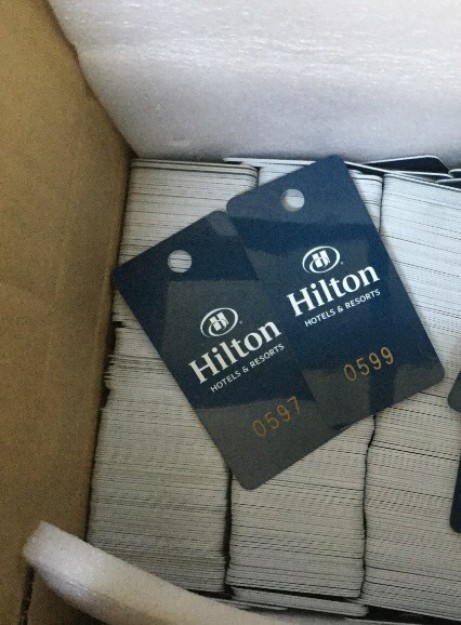
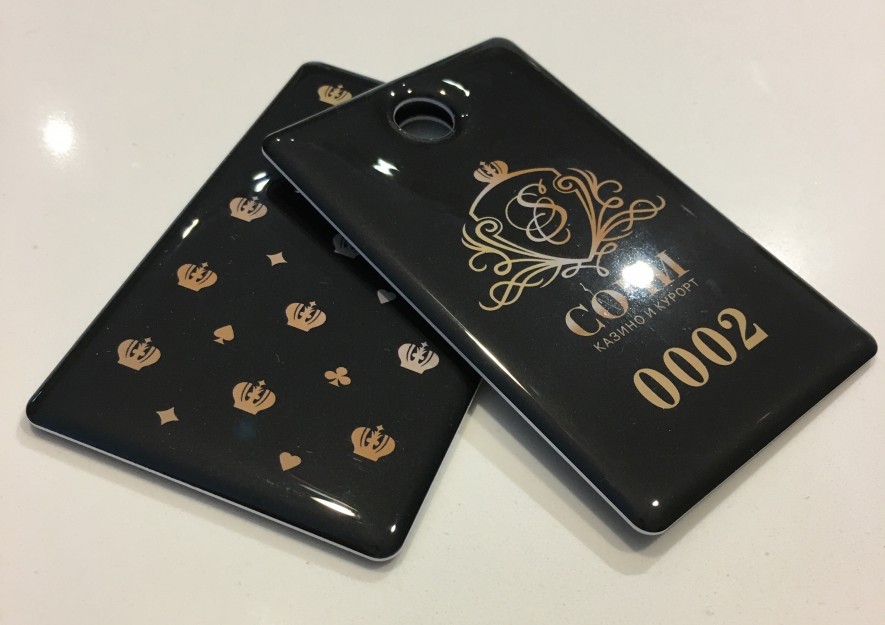
Garments can be assigned to numbered positions, tickets, RFID credentials or other identifiers. This creates a structured process for receiving, storing, finding and returning garments.
Adapt the System to the Facility
The conveyor path, service openings, controls and identification method can be selected around the room and the organization’s operating requirements instead of forcing the facility to adapt to a standard rack layout.
US Conveyor Dimensions EU Conveyor Dimensions
What Is an Automated Cloakroom or Wardrobe System?
An automated cloakroom system is a commercial garment storage and retrieval solution built around one or more powered garment conveyors. Clothing is placed on hangers or assigned carrier positions, and the conveyor moves the selected position to an accessible operator or pickup point.
The system may be configured as a simple powered wardrobe conveyor with forward and reverse controls or as a more advanced automated garment retrieval system with position search, digital request queues, RFID identification, controlled access doors and software integration.
The appropriate level of automation depends on garment volume, peak traffic, available staffing, facility security and the required user experience. RFID and software are optional modules; the main product remains a custom physical storage and retrieval system.
- Powered garment conveyor movement
- Numbered hanger or storage positions
- Custom conveyor layouts for existing or new rooms
- Single-level, two-tier or multi-level storage
- Forward and reverse operator controls
- Optional foot-pedal and remote terminal control
- Optional automatic position search
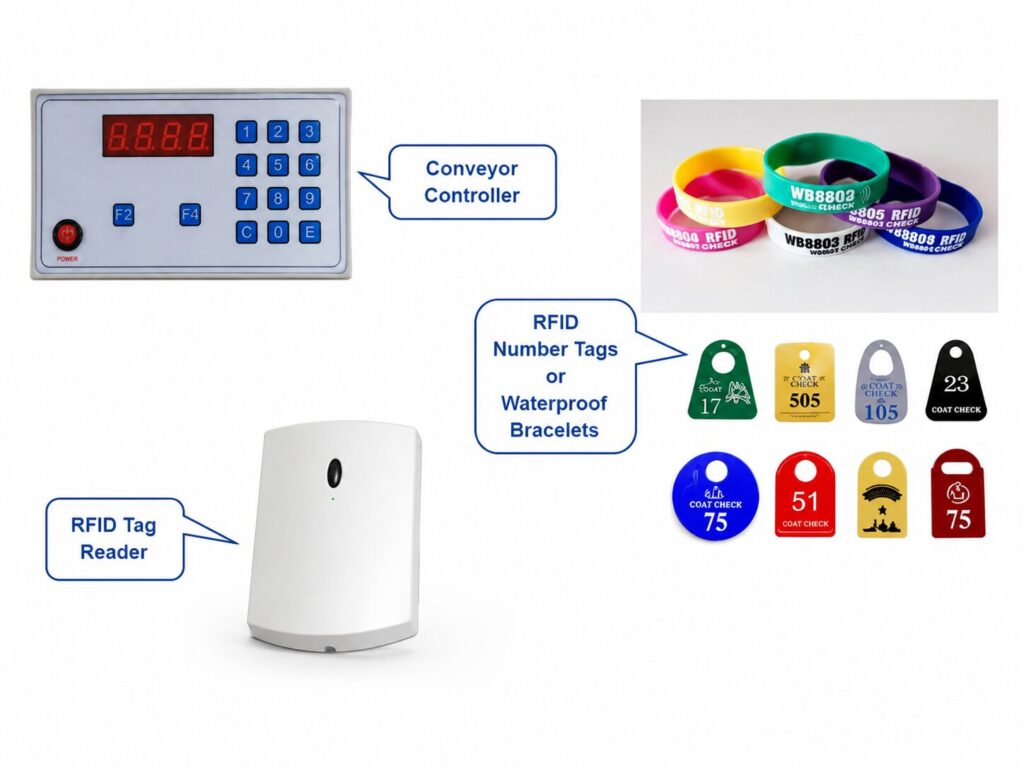
- Optional RFID cards, tags or wristbands
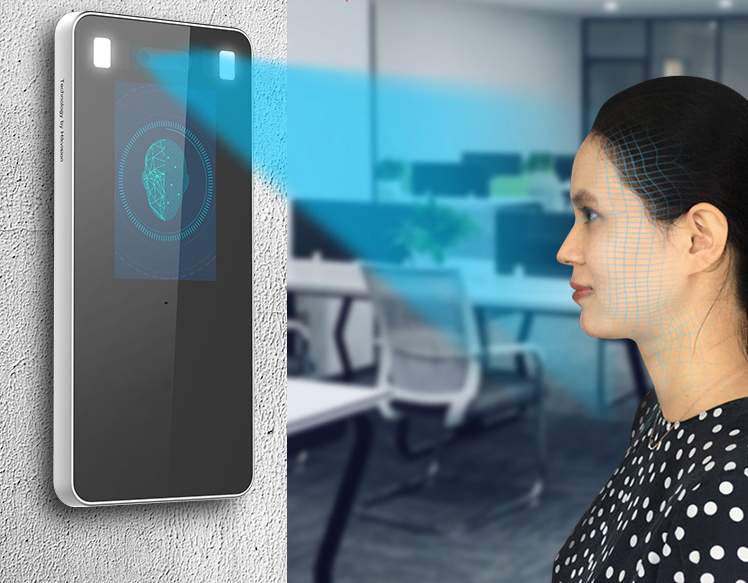
- Optional face recognition or other identity verification
- Optional controlled pickup doors and access control
- Optional software, transaction records and request queues
- Support for multiple conveyors and service zones
Cloakroom, Wardrobe, Coat Check, Checkroom and Coatroom Systems
Organizations in different countries often use different names for similar garment-handling operations. Understanding these terms helps project teams select the correct system and helps international buyers find the appropriate commercial solution.
Automated Cloakroom System
This term is widely used in the United Kingdom, Europe and international markets for a system that stores coats, jackets, workwear or other garments in a designated cloakroom and retrieves them through a conveyor or automated search process.
Automated Wardrobe System
A commercial wardrobe system may serve theaters, performance venues, hospitals, universities, staff facilities or other organizations that need organized storage and retrieval of garments. It should not be confused with a residential closet carousel.
Coat Check System in the United States
Hotels, casinos, theaters, restaurants, museums and event venues in the United States commonly use the terms coat check, coatroom or checkroom. Projects focused specifically on guest coats and outerwear are covered in greater detail on our automated coat check systems page.
Garment Storage and Retrieval System
This broader technical term describes the complete process of receiving garments, assigning storage positions, moving them through the storage area and returning them to the correct person or department.
Custom Garment Conveyor Design for Every Room
Automated cloakrooms are not one-size-fits-all products. A useful design must account for the room shape, structural conditions, doors, columns, counters, ceiling height, expected garment volume and the way people move through the facility.
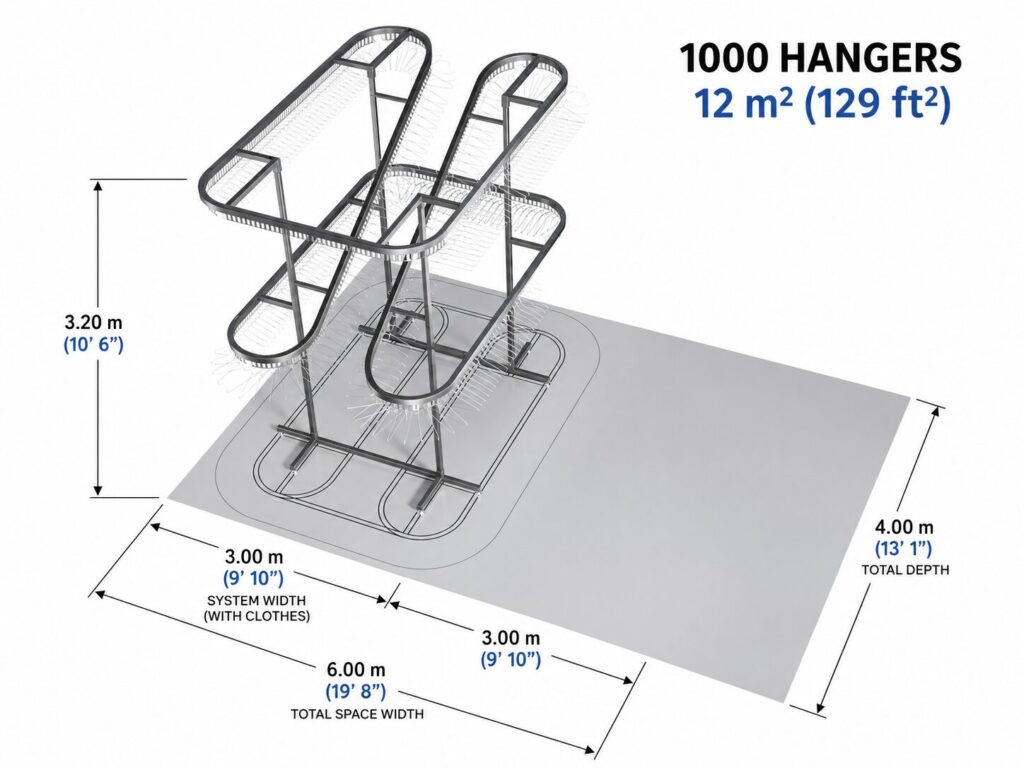
Fresh USA prepares conveyor concepts around project drawings, room measurements, photos and workflow requirements. The objective is to create an efficient path that provides the required capacity while maintaining practical loading, retrieval, service and maintenance access.
Room and Building Information
- Room length, width and ceiling height
- Columns, beams, walls and structural obstructions
- Doors, corridors, counters and service openings
- Available floor, wall and overhead space
- Required operator and maintenance clearances
- Electrical supply and preferred control locations
- New-construction or retrofit conditions

hanger conveyor system CAD diagram
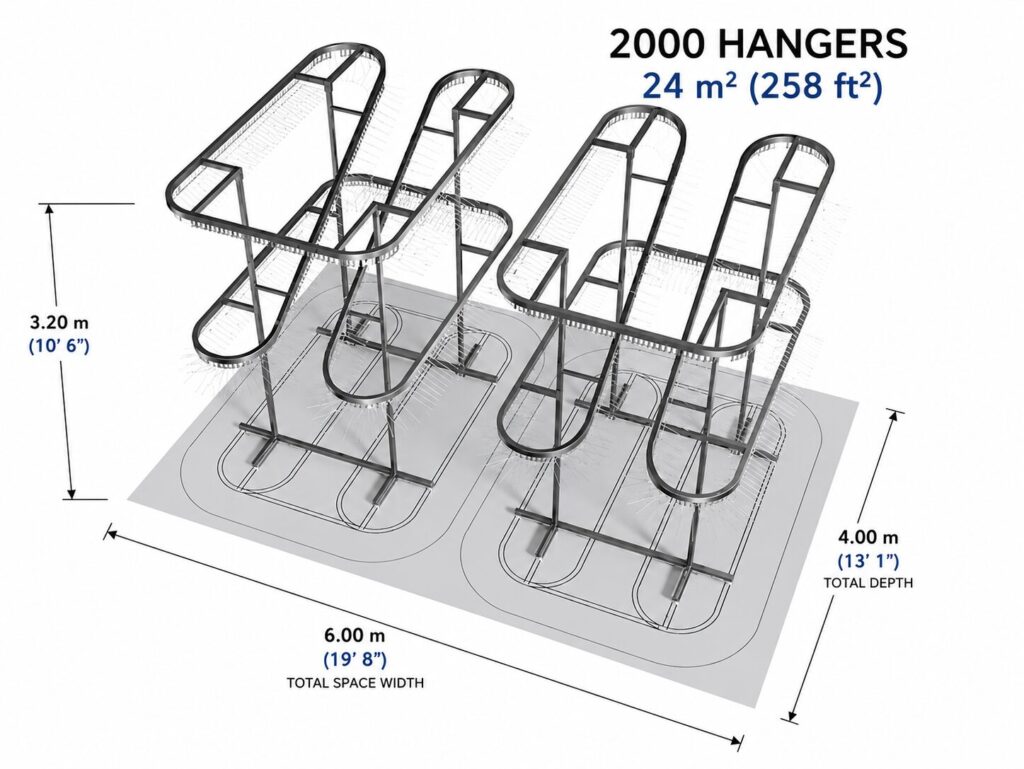
Operating Requirements
- Expected number of garments or hanger positions
- Average garment type, length and hanger spacing
- Peak arrival, departure or shift-change volume
- Number of attendants, operators or pickup points
- Visitor, employee or mixed-use operation
- Numbered ticket, digital search or RFID workflow
- Required security and access-control level
- Future capacity and expansion plans
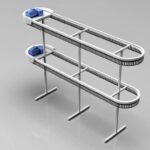
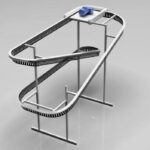
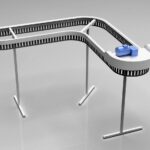
Automated Cloakroom Conveyor Layout Options
The conveyor track can follow many room configurations. The most effective layout is selected according to garment capacity, structural conditions and the location of loading and retrieval points.
Oval and Closed-Loop Conveyor Systems
An oval or closed-loop conveyor continuously circulates garment positions and works well when loading and retrieval occur at one primary service point.
U-Shaped, L-Shaped and Custom Conveyor Paths
Custom paths can follow walls, work around corners and columns and use areas that would otherwise be difficult to organize with fixed garment racks.
Straight Conveyor Sections
Straight sections may be appropriate for long rooms, transfer routes or applications where garments move between defined loading and retrieval areas.
Two-Tier and Multi-Level Wardrobe Systems
Where ceiling height and building conditions allow, garments can be stored on more than one level. This increases capacity while preserving valuable floor area.
Overhead Garment Storage
Overhead conveyor sections can move garments above selected work or circulation areas while keeping usable space below. Support structure, clearance, garment length and operator access must be reviewed for every project.
Multiple Conveyors and Service Zones
Large facilities may require several conveyors, separate wardrobe zones or multiple operator stations. Controls can be planned to identify the correct conveyor and move the requested position to the appropriate service point.
Explore Commercial Garment Conveyor Systems


Choose the Right Level of Cloakroom Automation
Not every organization needs the same technology. Fresh USA can configure the system around the required level of control and automation.
Powered Operator-Controlled Conveyor
The operator moves the conveyor forward or backward using push-button, foot-pedal or remote controls. This configuration improves physical storage and movement while keeping the operating process simple.
Automatic Position Search
The operator enters a hanger, cell or storage-position number. The control system moves the requested position to the access point and reduces manual conveyor searching.
Queued Garment Retrieval
Digital controls can store several requests and process them in an efficient sequence. Priority functions may be configured where the operating process requires selected requests to be handled first.
RFID Cloakroom System
RFID cards, tags or waterproof wristbands can connect a person or transaction with an assigned garment position. RFID may also support access to lockers, doors or other facility services when the broader system is designed for that purpose.
Controlled Access and Pickup Doors
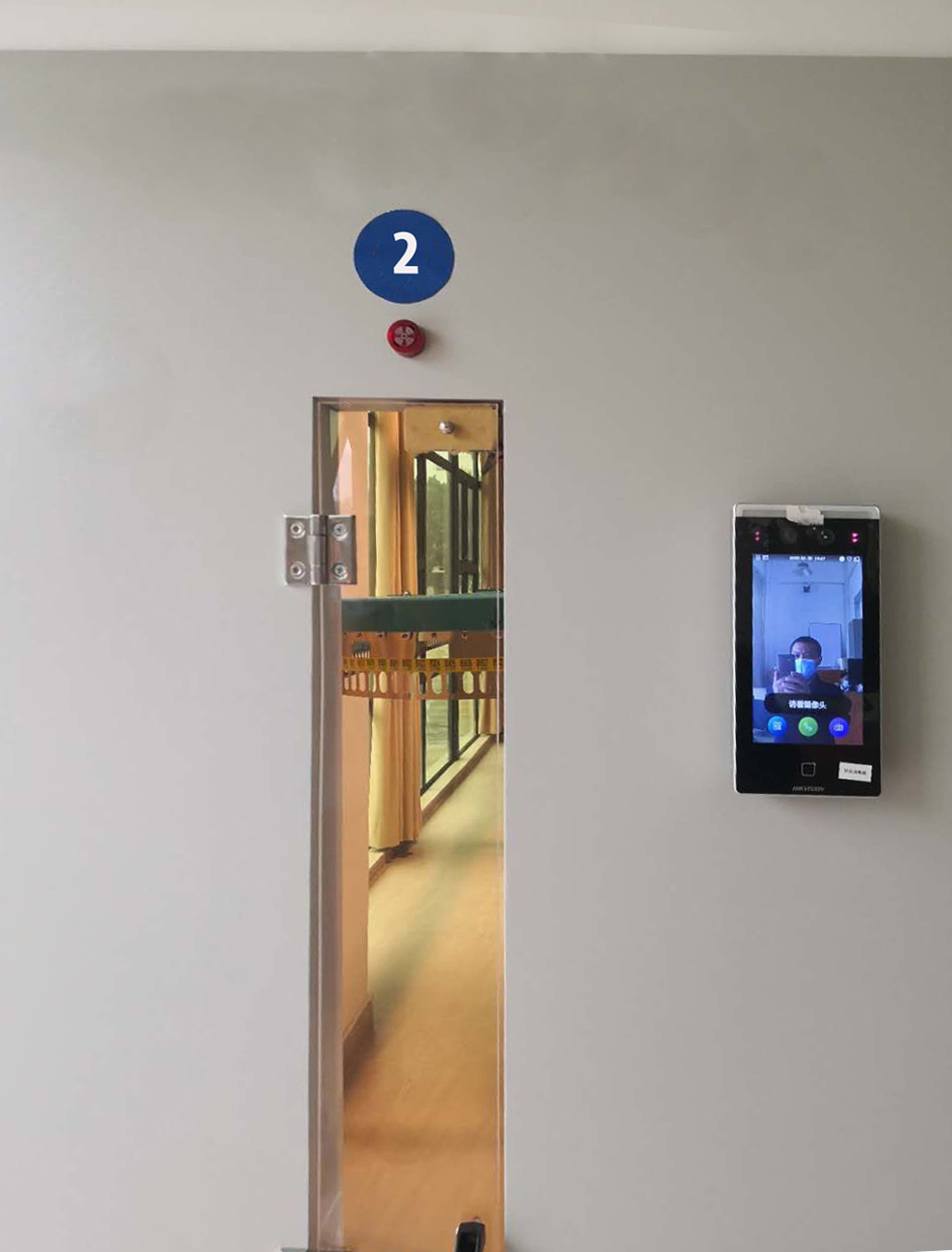
Garments can be delivered to an attended service opening or a controlled access point. Depending on the project, doors may be connected with RFID credentials, employee identification, face recognition or another approved verification method.
Integrated Multi-Conveyor Control
A central control interface can operate more than one conveyor or several levels of a garment storage system. Integration with external clothing-tracking software or facility systems can be evaluated according to the project requirements.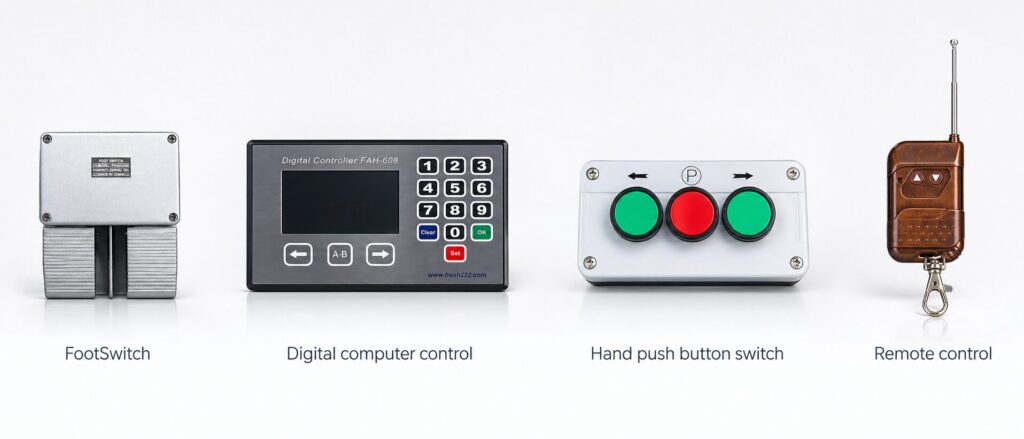
How an Automated Cloakroom System Works

- Garment Check-In
The visitor, employee or attendant presents the garment at the service point. - Position Assignment
The garment is assigned to a numbered hanger, cell or conveyor storage position. The assignment may be recorded manually or through optional software. - Identification
A numbered ticket, RFID card, wristband, employee credential or other identifier can be connected with the assigned position. - Conveyor Storage
The garment is loaded onto the conveyor, and the system moves it into the storage area. - Retrieval Request
The operator enters the position number or reads the selected identifier. - Automated Garment Retrieval
The conveyor moves the assigned garment position to the service opening or controlled pickup point. - Return and Transaction Completion
The garment is returned to the correct visitor or employee, and an optional digital record can be completed.
Applications for Automated Cloakroom and Wardrobe Systems
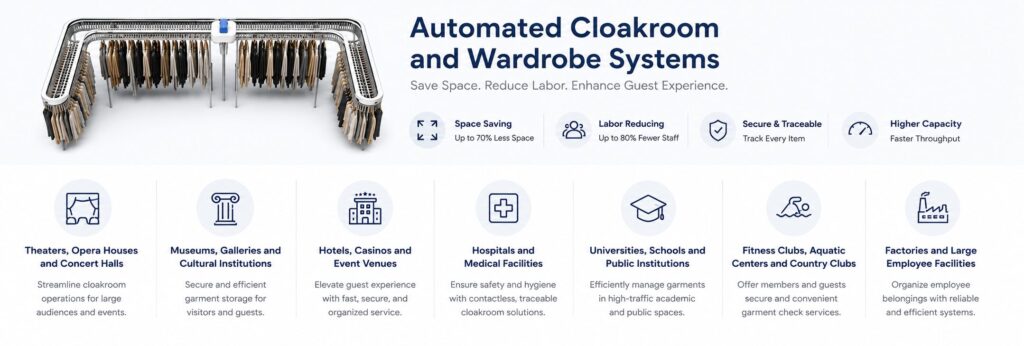
Theaters, Opera Houses and Concert Halls
Large audiences often arrive and leave within narrow time windows. Conveyor-based cloakrooms help organize high garment volumes and reduce the distance attendants travel during peak retrieval periods.
Museums, Galleries and Cultural Institutions
Visitor garments, bags or selected personal items can be stored in an organized cloakroom that supports consistent service throughout the day.
Hotels, Casinos and Event Venues
Ballrooms, conferences, restaurants, gaming facilities and special events may create sudden coat-check demand. For projects centered specifically on guest outerwear, see our coat check conveyor systems.
Hospitals and Medical Facilities
Automated wardrobe systems can organize staff outerwear, uniforms or selected work garments. Identification and controlled access options can be added when departments require a defined issue-and-return process.
Universities, Schools and Public Institutions
Educational and government facilities can use commercial wardrobe systems for visitors, employees, events or designated garment-storage operations.
Fitness Clubs, Aquatic Centers and Country Clubs
RFID wristbands or membership credentials can be connected with assigned garment positions and other controlled facility services where the project requires integrated identification.
Factories and Large Employee Facilities
Employee garments, workwear and protective clothing can be stored on custom conveyors. Facilities that primarily need high-density employee uniform storage should also review our uniform storage systems.
Visitor Garment Storage and Employee Wardrobe Management
The same conveyor principle can support different workflows, but visitor cloakrooms and employee uniform operations should be designed differently.
A visitor cloakroom or coat check usually emphasizes rapid check-in, temporary position assignment and fast retrieval at the end of an event. An employee wardrobe may require permanent user records, repeated garment assignments, clean-and-soiled separation, laundry workflow or controlled uniform distribution.
Fresh USA separates these requirements during the design process. Projects that need automated employee uniform issue, return, RFID tracking and inventory management should review our hotel and casino uniform management systems.
Optional Identification, Software and Access-Control Features
The physical garment conveyor can operate independently, but additional modules may improve control, search speed and transaction visibility.
- Numbered tickets and hanger positions
- RFID access cards
- RFID garment tags
- Waterproof RFID wristbands
- Employee badges or user credentials
- Face recognition as an optional identification method
- Digital request and retrieval terminals
- Request queues and priority processing
- Manual forward and reverse controls
- Foot-pedal and remote-control operation
- Controlled service or pickup doors
- Multiple-conveyor control
- Transaction and retrieval history
- Integration with compatible garment-tracking software
These functions are selected according to the project. A customer does not need to purchase every technology in order to benefit from a custom automated cloakroom or commercial wardrobe conveyor.
Benefits of a Custom Garment Storage and Retrieval System
- Higher storage density: Use available floor and vertical space more effectively.
- Faster retrieval: Bring the requested garment position to the operator.
- Less unnecessary walking: Reduce repetitive movement through long rack aisles.
- More organized storage: Assign garments to consistent numbered or digital positions.
- Improved peak-hour workflow: Process multiple requests with a repeatable retrieval method.
- Flexible automation: Select basic powered controls or advanced identification and software.
- Custom room use: Design the conveyor around walls, columns, doors and service counters.
- Expandable configurations: Plan additional positions, conveyors or service points when space permits.
- International adaptability: Configure the system for cloakroom, wardrobe, coat check, checkroom or employee-garment applications.
What Information Is Needed for an Automated Cloakroom Proposal?
Every system is quoted according to its capacity, layout and automation requirements. To prepare an initial concept and estimate, please provide:
- Installation country, city and full project address
- Room drawing with dimensions
- Ceiling height
- Photos or video of the proposed installation area
- Required number of garments or hanger positions
- Typical garment type and length
- Number and location of service points
- Expected peak traffic or shift volume
- Preferred operator-assisted or controlled self-service workflow
- Required numbered, ticketed, RFID or software-based identification
- Information about doors, columns, counters and other obstructions
- Electrical requirements and available power
- Expected project schedule
Fresh USA designs and supplies garment conveyor systems for projects worldwide. Remote planning and technical support are available internationally. Installation service may be available for projects within the continental United States.
Related Garment Storage and Automation Solutions
- Automated Coat Check Systems — guest coat storage and retrieval for hotels, casinos, theaters and event venues.
- Uniform Storage Systems — high-density employee uniform storage using garment conveyors and carousels.
- Hotel and Casino Uniform Management Systems — employee identification, uniform issue, return, RFID and inventory workflows.
- Commercial Garment Conveyors — conveyor equipment, configurations and dimensional information.
Frequently Asked Questions
What is an automated cloakroom system?
An automated cloakroom system uses a powered garment conveyor to store clothing and move the requested hanger or position to an operator or controlled pickup point. Position search, RFID, software and access control can be added as optional modules.
What is the difference between a cloakroom and a coat check?
The terms often describe similar visitor-garment services. Cloakroom is more common in the United Kingdom, Europe and international markets. Coat check, checkroom and coatroom are more common in the United States and Canada.
Can the system be designed for an existing room?
Yes. Conveyor routes can be planned around existing walls, columns, doors, counters and ceiling conditions. Accurate measurements, photos and drawings are required to prepare a practical design.
How many garments can an automated wardrobe system store?
Capacity depends on conveyor length, hanger spacing, garment size, ceiling height and the number of storage levels. Fresh USA calculates the proposed number of positions for each project.
Can the conveyor use two storage levels?
Yes, where ceiling height, structural support, garment length and access requirements permit. Two-tier and multi-level systems can increase capacity without expanding the room footprint.
Is RFID required?
No. A system can operate with manual controls, numbered positions or automatic numerical search. RFID cards, tags and wristbands are optional when faster identification or integrated access is required.
Can one control system operate multiple conveyors?
Yes. Project-specific controls can be configured for several conveyors, storage levels or service zones. The final control architecture depends on the layout and operating workflow.
Can face recognition be used?
Face recognition can be considered as one optional user-identification method. It is not required and should be selected according to the facility’s privacy, security and operational policies.
Can the system serve both visitors and employees?
Yes, but the workflows should be planned separately. Visitor systems emphasize temporary garment assignment and rapid retrieval, while employee systems may require permanent records, uniform inventory, laundry processing and controlled distribution.
Can the system be integrated with garment-tracking software?
Integration can be evaluated for projects that require user records, garment assignments, transaction history, inventory tracking or connection with other facility systems. Compatibility and scope must be reviewed before the project is quoted.
Do you provide systems outside the United States?
Fresh USA supplies equipment and provides remote project support worldwide. Installation services are generally available for projects in the continental United States, while international installation arrangements depend on the project location and scope.
How do I request a quote?
Send the room dimensions, ceiling height, required garment capacity, location, photos, drawings and desired level of automation through our contact page or complete the project questionnaire.